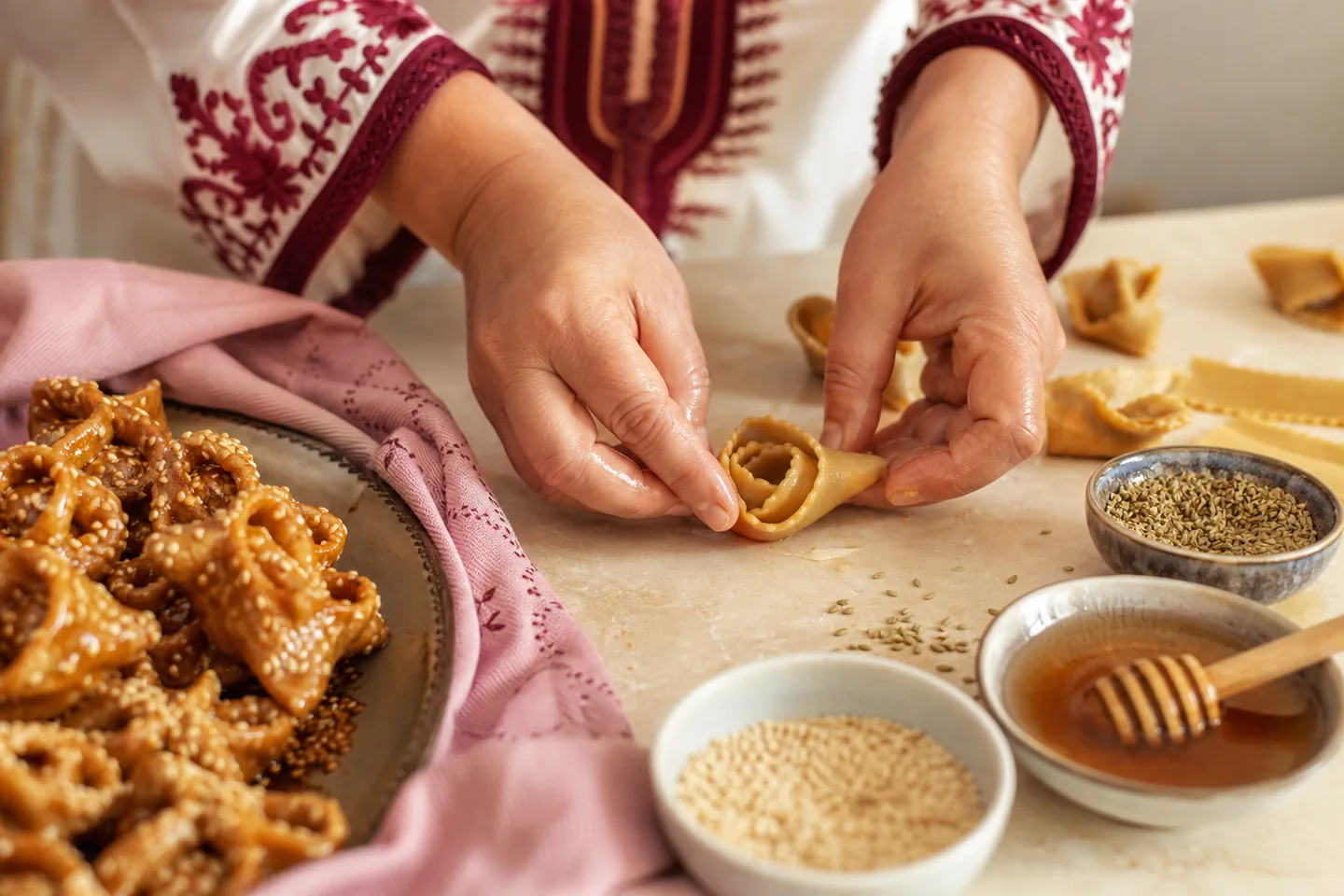
Chebakia is a shaped, fried and honeyed pastry associated especially with Ramadan; recipes vary by family, so ask about sesame, wheat, nuts and other allergens.
A pastry shaped by hand
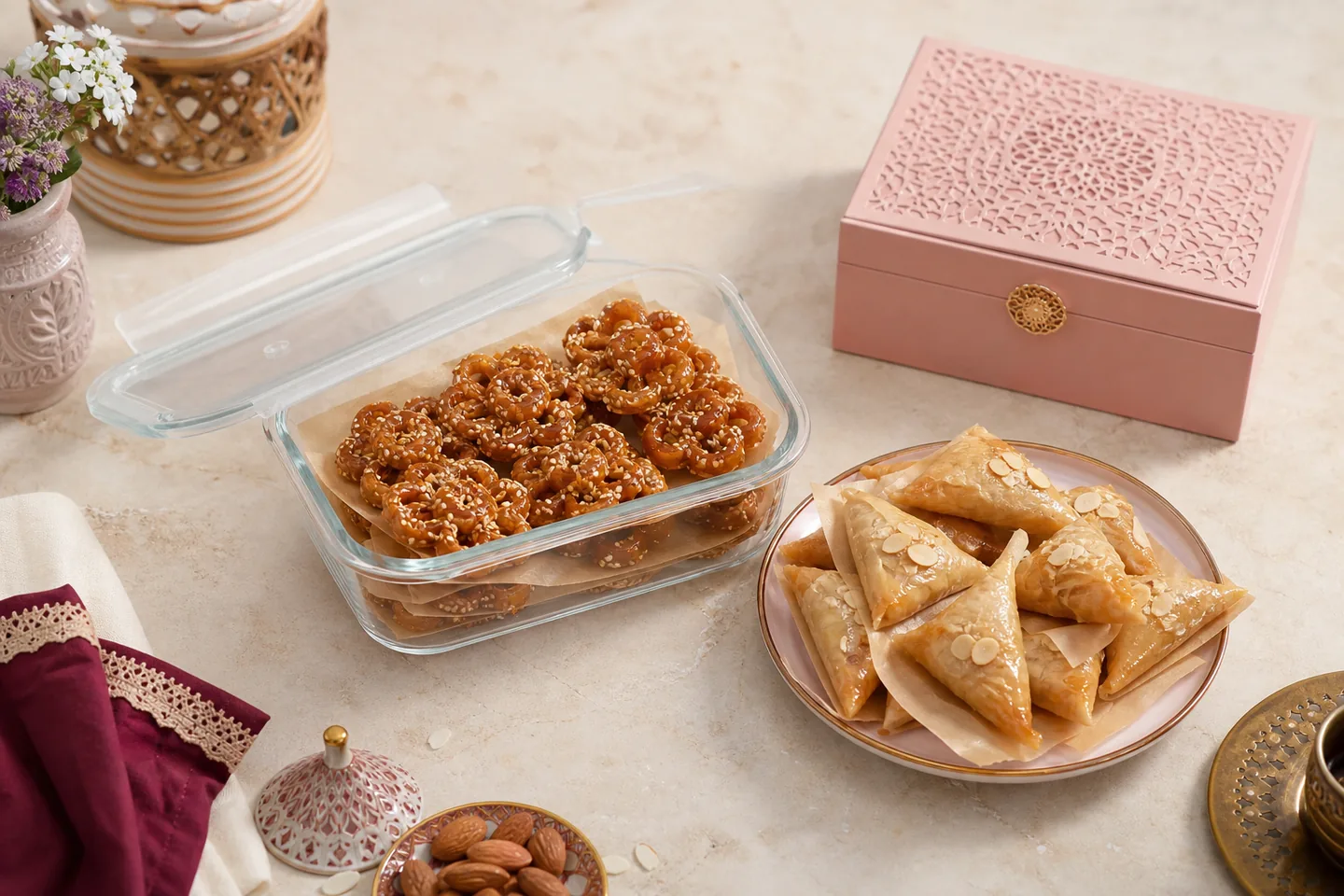
Chebakia begins with a spiced dough that is rolled, cut into strips and folded through itself. The characteristic flower is not simply decorative: the overlapping ribbons create crisp edges and tender inner folds. Shaping consistent pieces takes practice and explains why artisanal trays have a handmade character.
The formed pieces are fried, then dipped or coated while warm so honey reaches the folds. Sesame provides aroma and contrast. Orange blossom water, anise, cinnamon and other spices may appear depending on the household or bakery recipe.
Why chebakia belongs to Ramadan tables
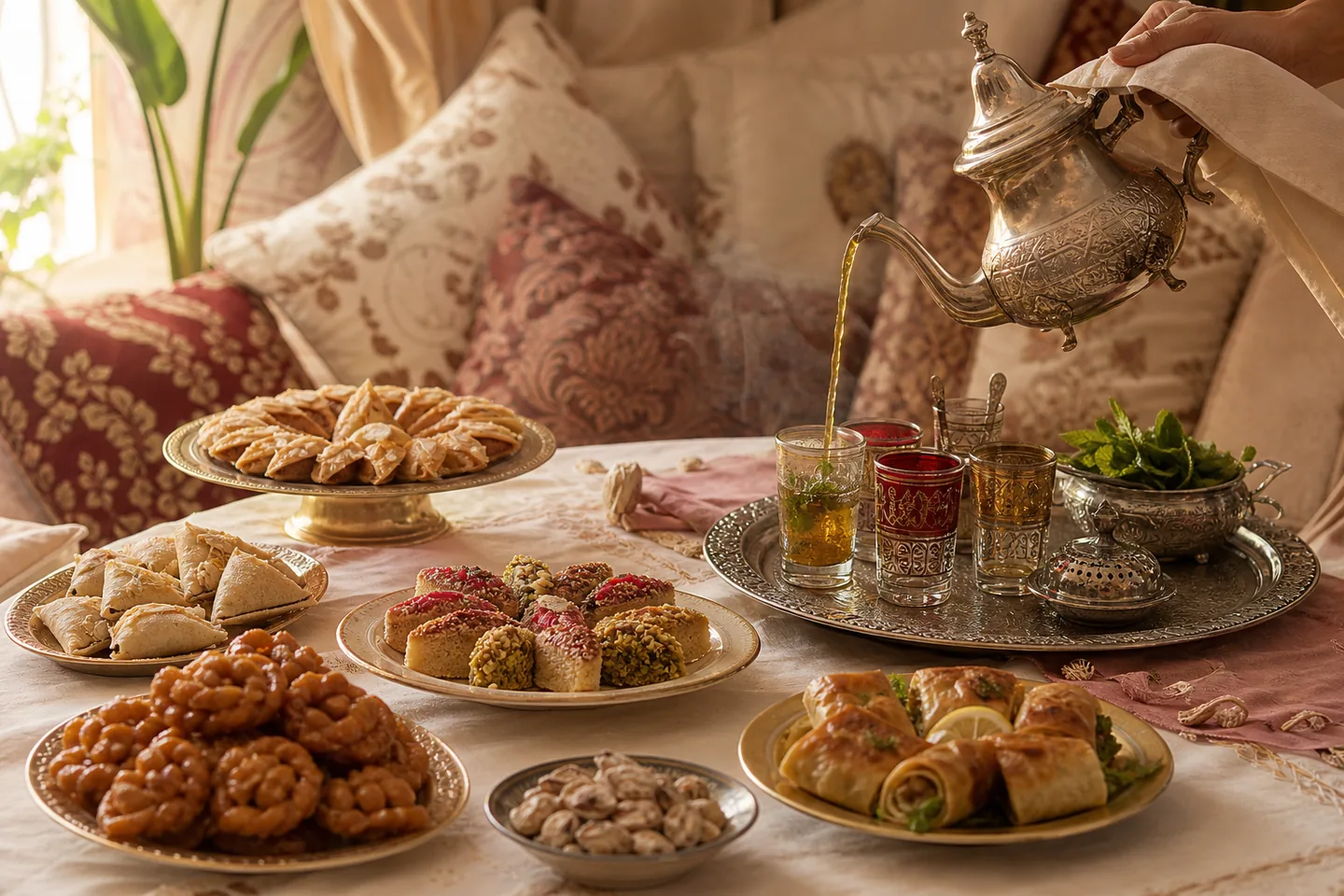
Chebakia is strongly linked with Ramadan in Morocco, where it is often served with harira. The combination of a savoury soup and a sweet, aromatic pastry is part of the familiar iftar table for many families.
It is also enjoyed beyond Ramadan at tea time, family gatherings and as a gift. The Moroccan National Tourist Office presents gastronomy as an important expression of the country’s heritage; chebakia is a good example of a recipe carried through family practice and skilled handwork.
Ingredients and allergens to discuss
A typical recipe may include wheat flour, sesame, honey, oil, orange blossom water and spices. Some versions also use almonds, butter, egg or other ingredients. The exact recipe matters for guests with allergies.
US food-safety guidance lists wheat, sesame, tree nuts, milk and eggs among major allergens. Tell the bakery about allergies before ordering, and do not assume that removing a garnish removes cross-contact risk in a working kitchen.
- Ask for the exact ingredient list for the batch.
- Mention sesame, nut, wheat, egg or dairy allergies.
- Ask about cross-contact before confirming.
- Keep allergen notes with a gift or event tray.
How to serve and order chebakia
Serve chebakia at room temperature with Moroccan mint tea, coffee or harira. Arrange it in a shallow pile so the flower shapes remain visible, and use tongs to keep honeyed fingers away from shared serving pieces.
When ordering, specify weight or guest count, the serving date and whether the tray is for a gift. At Fairouz Bakery, availability, final price and preparation timing are confirmed personally. Orders over 200 DH require advance payment before preparation begins.
Frequently asked questions
Is chebakia always made with sesame?
Sesame is common in both the dough and garnish, but recipes vary. Always ask for the exact ingredients if allergies matter.
Is chebakia eaten only during Ramadan?
It is especially associated with Ramadan, but it can also be served with tea, at gatherings or as a Moroccan food gift.
How far ahead should I order?
Lead time depends on quantity and season. Large Ramadan and celebration orders should be discussed early so availability can be confirmed.
Which common allergens can chebakia contain?
Recipes commonly use wheat and sesame and may include nuts, egg or other ingredients. Confirm the exact recipe and possible cross-contact before ordering.
What is the best way to serve chebakia?
Serve it at room temperature with Moroccan mint tea, coffee or harira. Keep the serving plate away from heat and direct sun.
Trusted sources
References used for heritage, food-safety and allergen guidance.
Moroccan National Tourist Office — GastronomyFDA — Safe Food HandlingUSDA — Food Allergies: The Big 9